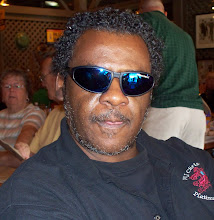
Well, it's a new year and I want to once again push chess as the answer to many of society's problems. Over the years as a teacher of the game, I have seen transformations in people with my own eyes that can only be compared to a metamorphosis. Children I have taught and helped to see themselves through the game of chess have made the transition from nerd to cool person, and from bully to thinker and achiever. They've changed from the quiet little girl to state champion. This is only the tip of the iceberg when it comes to chess.
Chess is magical. It has changed entire school environments that were almost impossible to learn in and calmed the mind of the students, allowing them to see that they make a choice about their education. They make the choice of the environment they learn in and who will and who will not allow them to learn. When enough students are awakened to the fact that they are losing ground because of disruptive people around them, they take a stand and stop this behavior themselves.
It is not cool not to be cool. It's that simple. Once the misbehavior becomes uncool, everyone still trying to continue it is out of place. Chess is the game that allows that person to get back into place by sitting down, shutting up, and having a good time fitting in. It allows them to be part of the crowd without losing so called "cool points" because they checked themselves instead of someone else trying to adjust their attitudes or behavior. How? Why? because every one of the students in any school wants to fit in and be cool.
The student who will not do anything the teacher says is taught the game of chess by me, of course, because I can see into any child and touch their curiosity about themselves. I say this because if you are not the right person, in certain environments, you simply can't reach the students. This child will learn that inside of them there is a person who can learn, win, think, and make better choices. And they'll realize just how much time they have been wasting. The things they did not believe or have been told all their lives that are not true about themselves are revealed. When the student is ready, the teacher will appear. I am here to serve the nation and help with my weapon -- the game of Chess. I have seen students improve in all of their other subjects for this reason alone. And chess is the tool that has done this! Give Chess a try at your school and if you need a Fixer, just call me -- Charles A. Smith. I can change everything!!
Chess On!!!
Showing posts with label Charles A. Smith. Show all posts
Showing posts with label Charles A. Smith. Show all posts
Monday, January 10, 2011


Monday, November 16, 2009
Adding the King and Queen
Now that you have developed a feel for the pawn game, it's time to add the King and Queen. Set up the rest of the pieces as I've described their proper setup before.
The "Queen always gets her color" is one way I convey to my students where to place the Queen. What this means is if the Queen is white, she stands on a light square. If the Queen is black, she stands on a dark square when the pieces are set up. That leaves a lone square for the King, and this means he will always start the game on a square that is opposite color of his hue. This is the starting position for the beginning of the end of The Pawn Game. We no longer play to get a pawn to the other side of the board anymore; now we play a game I call Take The King.
In Take The King, you must take or kill the other person's king to win the game. The movement of the King is simple: he can move one square at a time in any direction on a empty board. However, in his current position, he can't move at all because he is surrounded by other pieces. His movements are slow and plodding, and must be kept safe and away from the enemy or the game could be lot! The King is the deciding factor in the game at this point, so he is the most important piece on the board. Therefore, we say his value is the whole game itself.
The Queen is the strongest piece on the chess board, is usually the most aggressive piece on the board and is the most effective if used properly. Her value is nine points. I like to describe her movement to new students as such: She moves like a Rook and a Bishop combined. In other words, she has the power of both the Rook and Bishop. She can move across an empty board from one end to the other in one movement just like a Rook or Bishop!
So go at it now kiddies of all ages. Take The King!! Remember, the first move is still the same for both sides. Chess On !!
Wednesday, September 2, 2009
The Pawn Game, Part 2
Now that you have played the game with the pawns only, you should be able to answer the riddle from my last blog. And the answer is: You should not take a pawn that's touching another pawn when you can move past it and win the game! Now we need to add another piece to the board.
The Knight is the piece shaped like the head of a horse on most chess sets. The movement of the knight has been described many different ways (all of which are confusing to the beginner in my opinion). The knight stands on the second square from the egde of the board behind the pawns of the same color. Since you have two knights, they both stand on the second square from the left and right side of the board behind the pawns. The knight's movement is simple. Picture an upper case L. This is how the knight moves every time. The starting position is 0, the knight moves foward 1 square, then foward a second time. To complete the L shape, you move to the left or the right. (Tip: Beginning players, you should count to yourselves as you move the knight 0-1-2-3.) So now the knight has moved three squares. Remember, 0 does not count as a movement, it is just the position where the knight is positioned prior to beginning a move. Just remember 1-2-3 and that the total movement of the knight resembles a upper case L shape when you add the 0. Try it!!! Grab your knight and move it counting 0-1-2-3 two spaces foward and one to the right or left. Notice also you had to jump over your pawn to move your knight. The knight is the only piece that can jump over other pieces. Now, the goal of the pawn game is the same -- to win, you still have to get the pawn to the other side of the board. If the knight reaches the other side of the board you do not win. Only a pawn can win the game. Oh, and just one more thing: the pawns (as you now know) can only move foward. The knights can move in any direction as long as they are making a L shape and a piece of the same color is not in the #3 square. If you're doing this properly, the move is correct.
You cannot take your own pieces. The knight takes, not by jumping over the enemy pieces, but by landing right on top and removing them from the board! So if you move your knight and you count 0-1-2-3 and where the knight stops there is a pawn or knight of the opposite color, you can take it. Another Hint: Knights are worth 3 points and pawns are worth 1 point, so don't give up your knight for a pawn. That's bad math. Chess On!
Subscribe to:
Posts (Atom)